

Implementation
Build an API
Your application receives a documented API for controlled reading and modification of one defined data area.
A web application receives up to five usable views for one defined workflow, connected to existing APIs.
Your enquiry is non-binding. An order is created only when you accept our quotation .


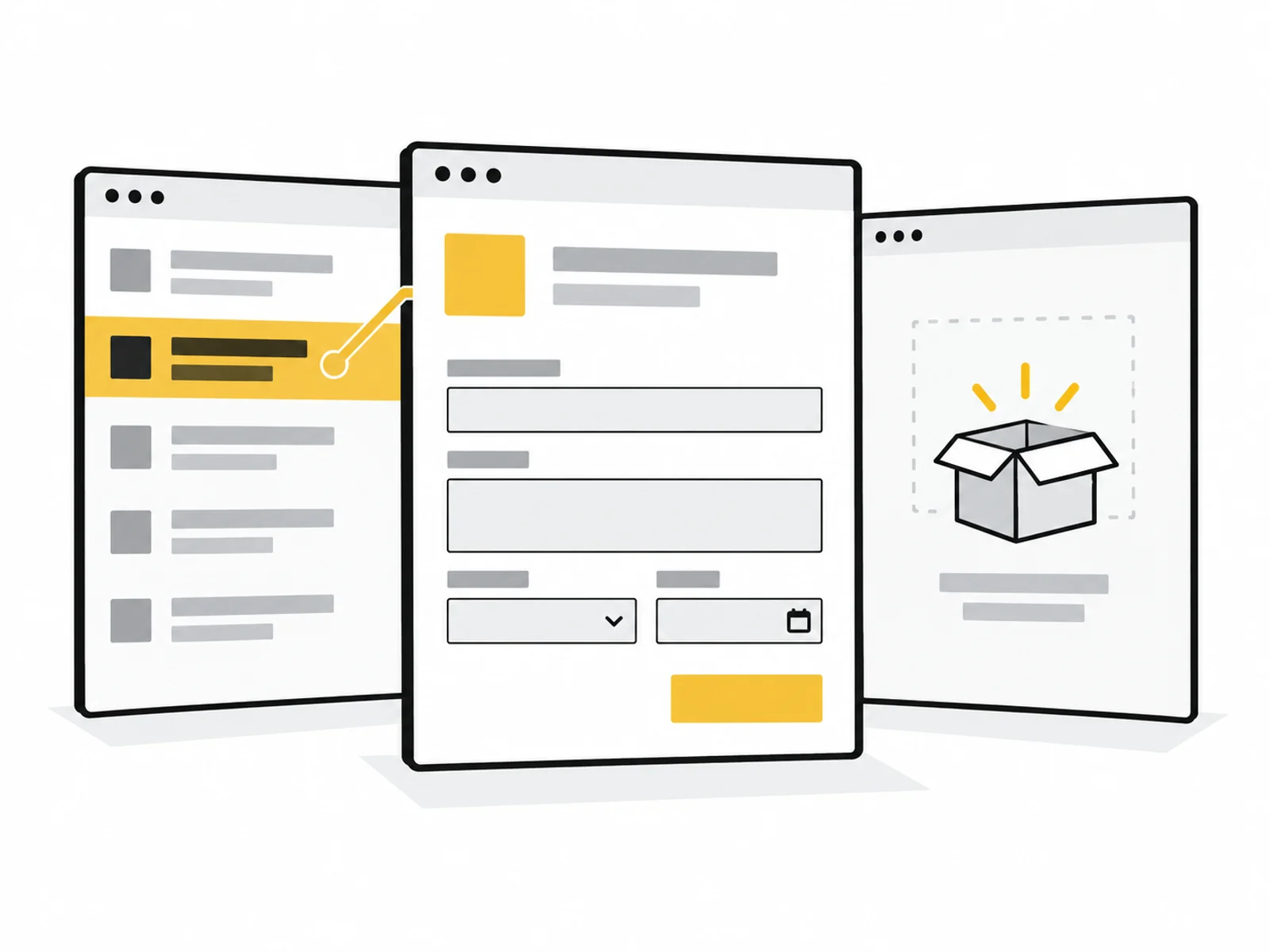



Image 1 of 4
A web-app interface connects views with data and actions. Users might select a case, edit details and then see its updated state. The package implements one such flow from existing design and connects it to available APIs.
This includes more than populated standard views. Empty lists, slow responses, invalid input and missing permissions need understandable behaviour. Actual permission checks and business logic must exist server-side. New backend functions are planned separately.
A frontend must know whether data is loading, absent or missing because of an error. If these look identical, users cannot assess the situation. We define these states for the agreed flow and connect suitable actions.
A documented API describes server data and errors. Without this contract, assumptions arise on both sides. Before starting, we align endpoints, formats and permissions. An artificial sample-data demo is not considered a finished integration.
Data and endpoints exist, but the workflow is not usable yet. We implement agreed views in the existing project.
The extension should fit navigation and components. We clarify which building blocks can be reused and which are new.
Prototypes often omit empty data and failed responses. A usable interface explicitly plans and tests these states.
We map up to five views to available endpoints. Formats, actions and possible errors are clarified before implementation.
The interface connects presentation with the existing API. Changes show loading feedback and are marked successful only after an appropriate server response.
We test the agreed flow using suitable data and roles. Handover and documentation name remaining backend dependencies.

The interface can present existing permissions clearly but does not replace server-side access control. This boundary is explicitly reviewed during API alignment.
The result is a limited flow within your application. Further views or changed data contracts count as additional work even when visually similar.
Describe what already exists: design, website or application. A specific journey with the views and states to develop or change is useful.
We then clarify which technology the site uses, where changes are tested and how they reach you. We also discuss missing content. Do not send repository tokens or production credentials through the enquiry form.
What is included, what do you need and what happens after your enquiry?
The process in detail →No. We review the existing stack and requirements. A working application is not moved to another framework solely for this package.
An agreed interface description may enable an early start. Finished integration and acceptance still require accessible endpoints and suitable test data.
No. The service connects an interface to existing functions. New business logic, persistence and server-side permissions are separate backend work.
Relevant states are agreed before starting and technically implemented. This does not automatically include a comprehensive new application design concept.
Agreed views are implemented for defined screen sizes. Complex tables or workspaces need deliberate mobile priorities beforehand.
We confirm the start and delivery deadline in writing after reviewing your documents. The agreed scope and complete source data determine the schedule.
Approved views with states and a documented API Test data, test access and an agreed role model Credentials must not be included in the enquiry. Details are agreed only after written commissioning.
One written follow-up round is included. The service scope lists the analyses, designs or technical changes covered by the package. We agree additional work with you before it begins.
A desktop design is rarely enough for implementation. Clarify content, narrow layouts and the states of interactive elements.
Read the guide ↗Your application receives a documented API for controlled reading and modification of one defined data area.

We turn a clearly scoped product idea into a first usable web application, with one core journey, an interface and a backend.