


Implementation
Rebuild a website or shop
Build a small website or a defined shop as one connected project, from site structure through to a technical test version.
We turn an approved design into a responsive website or landing page that works on small and large screens.
Your enquiry is non-binding. An order is created only when you accept our quotation .


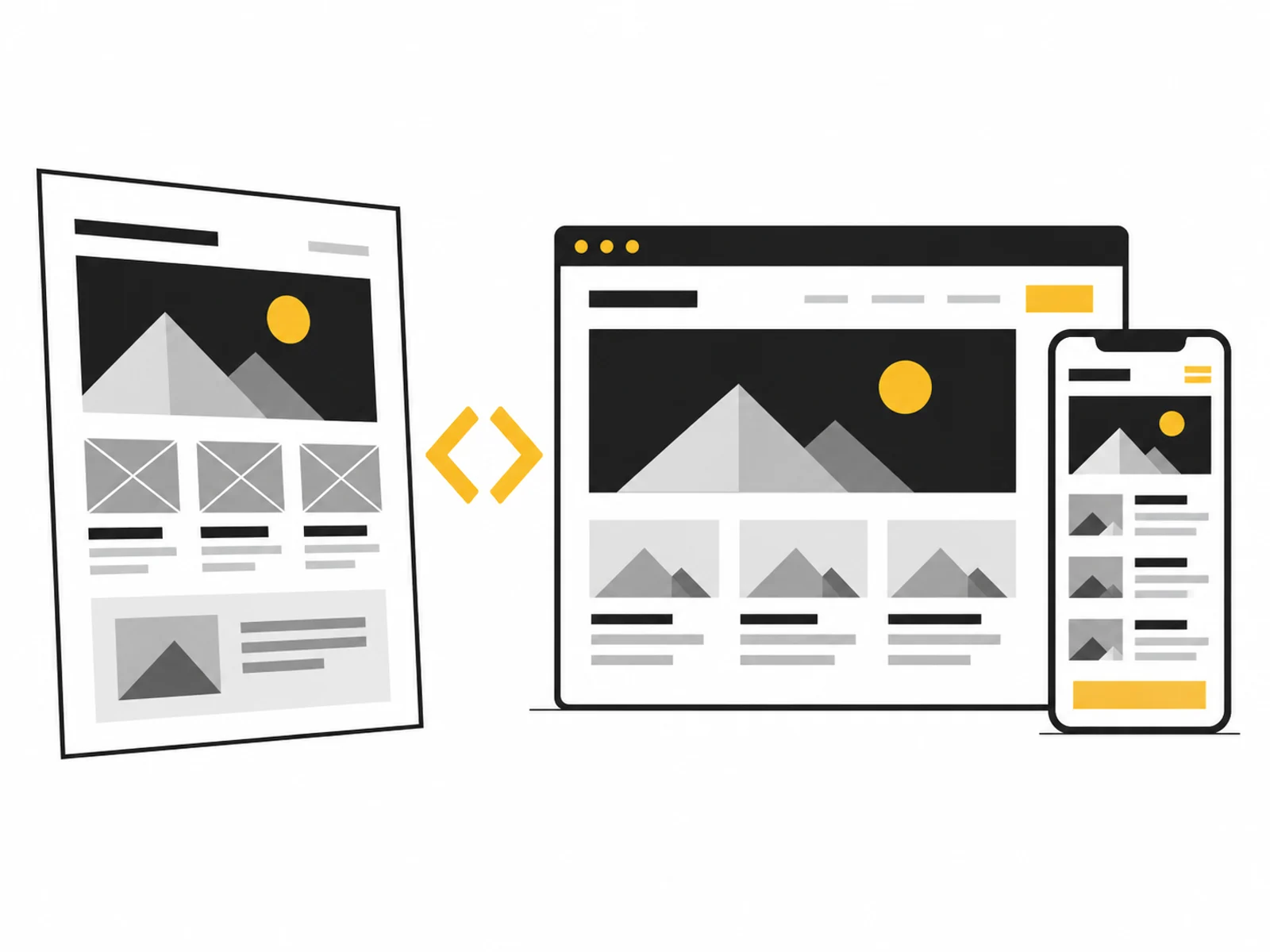


Image 1 of 4
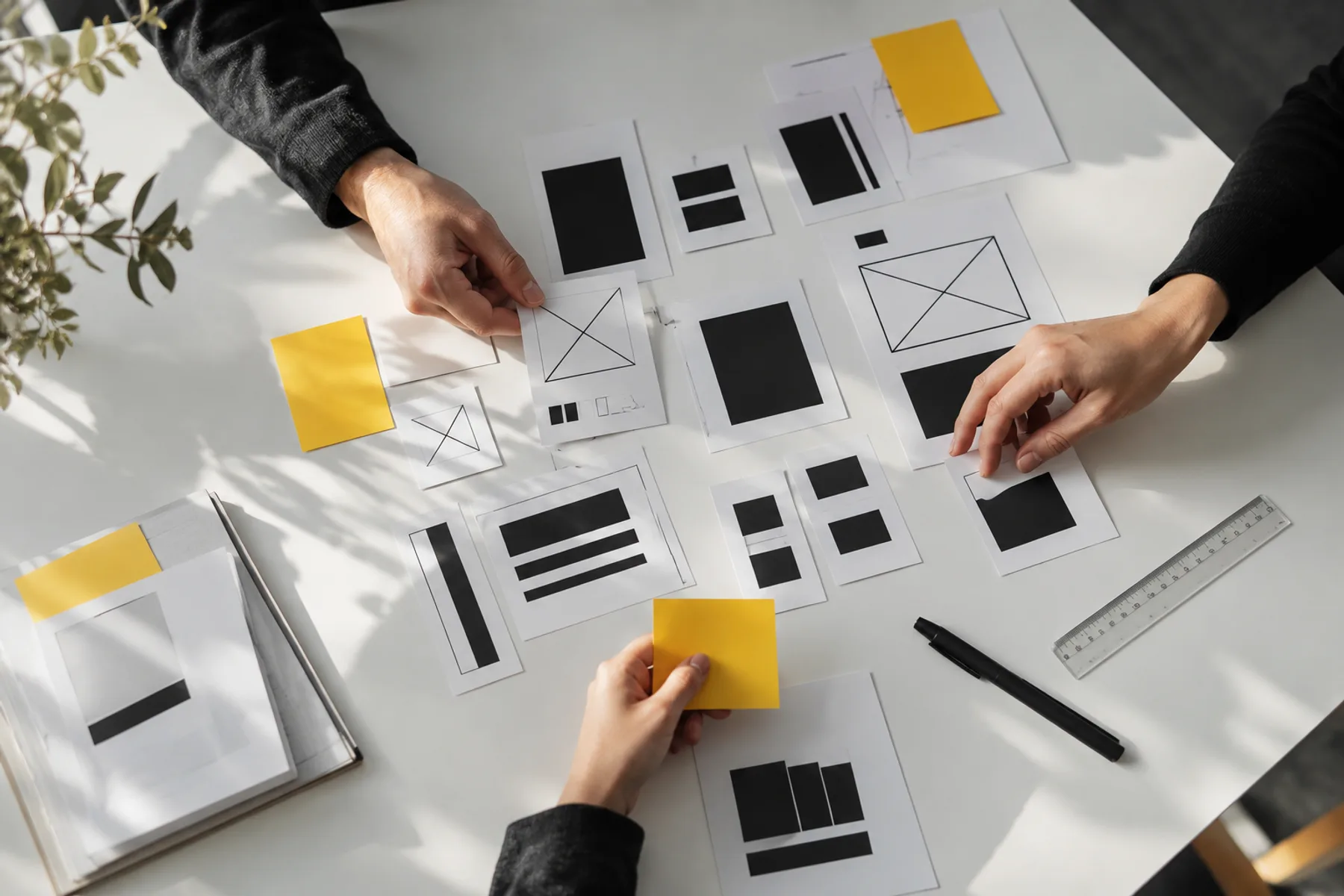
A layout shows how a page should look. Frontend development turns it into a usable website: text and images adapt to screen sizes, links reach the right destination and interactive elements have meaningful states. The package requires approved design and finished content.
We work in the agreed technical environment and build up to three page types. Recurring elements become shared components. If a complete design concept, new content system or server-side functions are still missing, we clarify those tasks first. A website rebuild may then fit better.
Many widths lie between a large screen and a smartphone. Long headings, enlarged text and keyboard interaction reveal whether layouts work there. We define how each agreed page type adapts.
Public content should be available as meaningfully structured HTML. Interactive technology is used where functions need it. Metadata and headings are technically prepared; this does not automatically produce search rankings. Supplied content quality remains a separate factor.
You want an existing design implemented. We first check whether page states, content and mobile requirements are sufficiently clear.
A new page needs shared navigation, typography and technical conventions. We extend the existing structure and agree necessary exceptions.
A good desktop image is insufficient. Long text and narrow views are tested with actual content to preserve usability and readability.
We count distinct layouts and sections, clarify missing states and identify where implementation belongs technically. This creates testable scope.
Shared building blocks represent navigation, content and interactions. Implementation follows the approved design and considers different screen sizes.
Pages are checked with supplied content. Browser display, keyboard paths and the shared correction round are addressed before handover.
Your team receives implemented page types with documented test results and dependencies on the existing application. Additional page types, a new design concept or new imagery are planned separately. Certification of the entire website is excluded.
Describe what already exists: design, website or application. A specific journey with the views and states to develop or change is useful.
We then clarify which technology the site uses, where changes are tested and how they reach you. We also discuss missing content. Do not send repository tokens or production credentials through the enquiry form.
What is included, what do you need and what happens after your enquiry?
The process in detail →Not necessarily. Accessible, authoritative layouts, dimensions, states and usable assets matter. The handover format is reviewed before starting.
Yes. Responsive implementation is included. If the design lacks mobile rules, these are agreed beforehand for the selected page types.
That depends on your existing content system. We use agreed existing content workflows; building a new CMS adds scope.
Presentation of an existing form can be planned. A new sending or storage process with validation is a separate function and scoped separately.
Handover first takes place in the agreed test environment. Publication requires approved content, appropriate access and an expressly agreed process.
We confirm the start and delivery deadline in writing after reviewing your documents. The agreed scope and complete source data determine the schedule.
Approved layouts including mobile requirements and finished content Repository and test-environment access or an agreed technical foundation Credentials must not be included in the enquiry. Details are agreed only after written commissioning.
One written follow-up round is included. The service scope lists the analyses, designs or technical changes covered by the package. We agree additional work with you before it begins.
A desktop design is rarely enough for implementation. Clarify content, narrow layouts and the states of interactive elements.
Read the guide ↗Build a small website or a defined shop as one connected project, from site structure through to a technical test version.
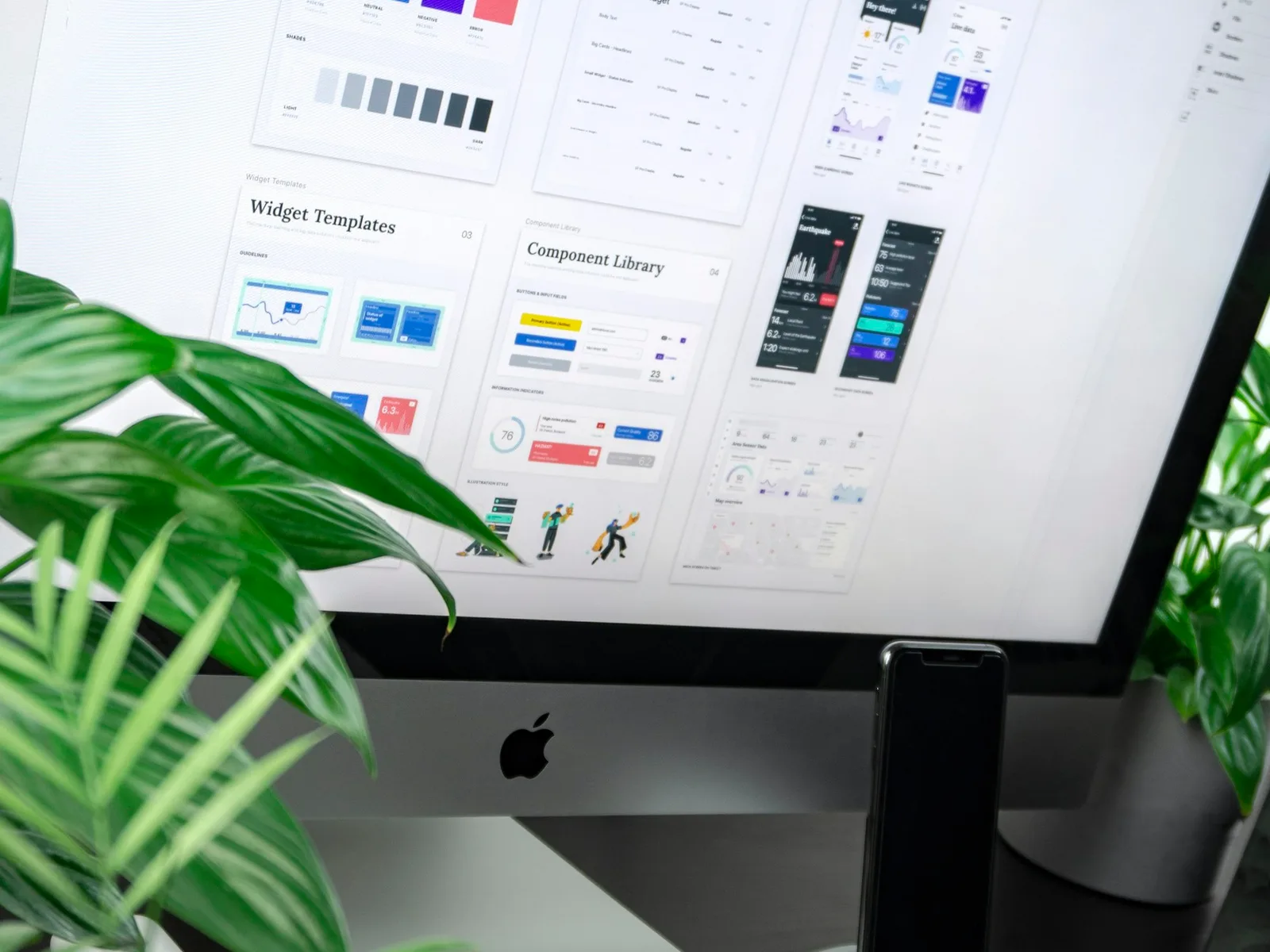
We build recurring interface elements as shared code components, with defined variants, states and documentation.