


Implementation
Connect an existing API
Your application exchanges one clearly defined data type with an existing service, including error handling and documented handover.
Synchronise contacts, products or order statuses between two systems, with an authoritative source, defined field rules and traceable conflict handling.
Your enquiry is non-binding. An order is created only when you accept our quotation .


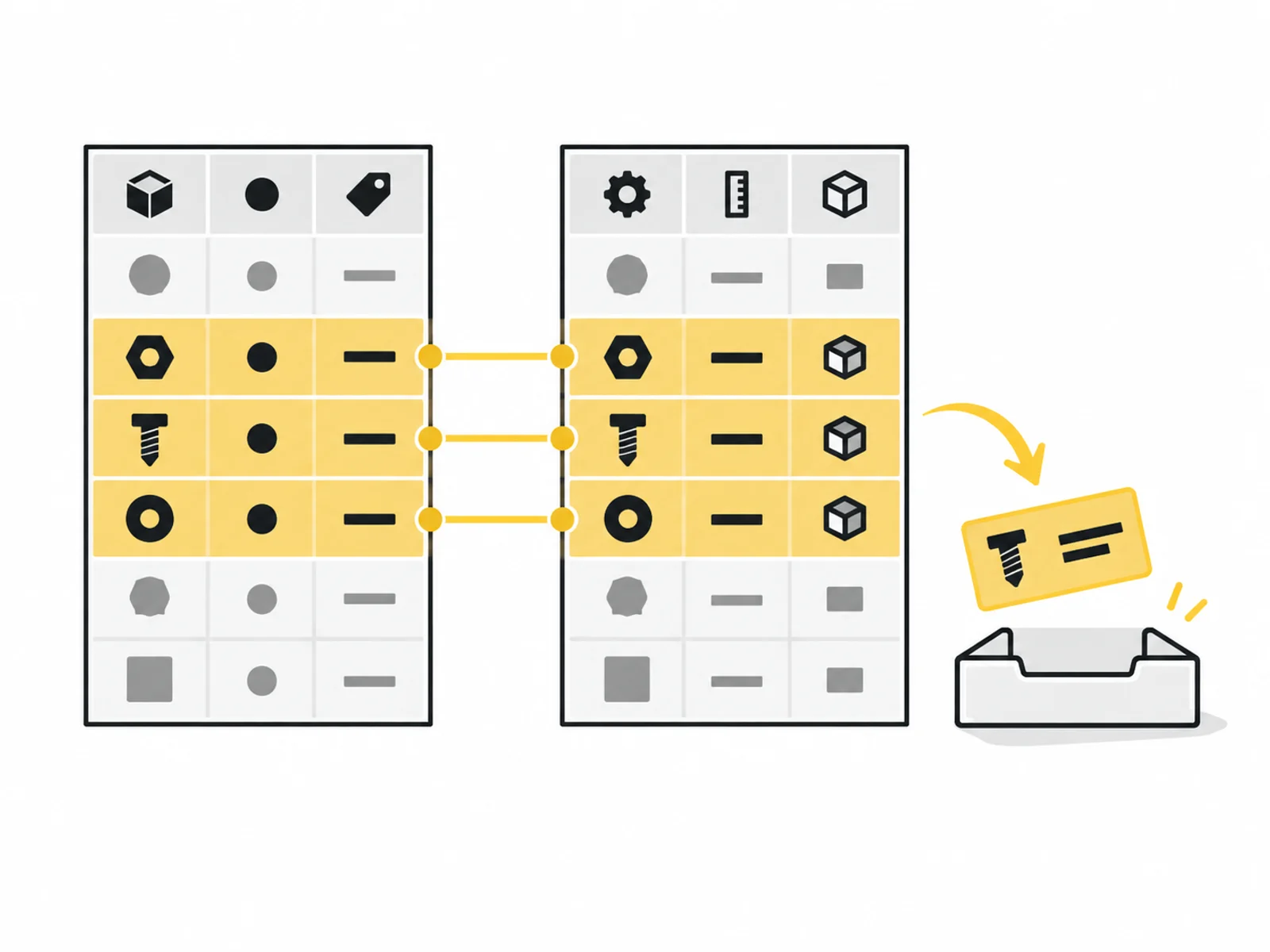



Image 1 of 4
A contact has a new address in the CRM but the project tool still has the old one. Regular reconciliation can handle these differences if each detail has a clear authoritative system. We define these rules and implement one specified transfer direction.
The package covers one data type, such as contacts or products. Stable identification is crucial. A name alone often cannot reliably identify two entries as the same object. New, changed and doubtful records therefore follow different processing paths.
The source determines the value; the destination adopts it under an agreed rule. We check different formats, empty details and allowed values. An empty telephone field, for example, should not erase a locally maintained number without agreement. Mapping documents these decisions.
An initial test uses a limited selection and shows planned changes. The confirmed initial run follows only afterwards. Retries must recognise the same objects; failed records are separated transparently so one conflict does not invisibly block the whole dataset.
New details are maintained in one system and manually copied later into another. We define which fields transfer regularly and which remain local.
A contact exists several times with slightly different spelling. Doubtful matches are separated before automatic changes and made visible for review.
Some data arrived while some is missing. The flow needs a controlled retry path with stable identifiers to avoid creating a second dataset.
We record data type, identifiers, formats and change rules. Deletions and empty values are explicitly discussed before they may affect existing details.
A limited test dataset goes through mapping. We compare planned and actual changes and test conflicts and repetition of already processed records.
After confirmation, the agreed initial run is performed or prepared for execution. Handover describes schedule, error display and follow-up processing.

The log shows which records transferred and which need a business decision. A technically successful connection does not remove contradictory source information.
A second transfer direction or additional data types will need new conflict rules. Such extensions are described as additional scope beforehand.
Describe a typical run: what triggers it, which programs are involved and when is it finished? An example without personal data is enough to begin.
Note exceptions, approximate frequency and the responsible person. Credentials, real customer messages and confidential documents do not belong in the enquiry form.
What is included, what do you need and what happens after your enquiry?
The process in detail →The base package covers one direction. Two-way synchronisation needs rules for competing changes and is priced as a separate extension.
Deletions are implemented only if expressly included in confirmed rules. A record missing from a single retrieval is not automatically a deletion instruction.
An agreed initial run for up to 1,000 records of the chosen type is included. Larger datasets and extensive cleanup are separately defined beforehand.
The appropriate technical solution depends on APIs, data volume and operations. Existing n8n, Zapier or Make setups can be used if they meet requirements.
Field rules name the authoritative source. Cases without a clear decision are logged and returned for review rather than silently resolved using an arbitrary value.
We confirm the start and delivery deadline in writing after reviewing your documents. The agreed scope and complete source data determine the schedule.
Two accessible systems with suitable APIs and unique record identifiers An identified source for each field and business decisions on conflicts and deletion Credentials must not be included in the enquiry. Details are agreed only after written commissioning.
One written follow-up round is included. The service scope lists the analyses, designs or technical changes covered by the package. We agree additional work with you before it begins.
Field mapping, stable identifiers and conflict rules for synchronisation between CRM, shop and other applications.
Read the guide ↗Your application exchanges one clearly defined data type with an existing service, including error handling and documented handover.

Move a defined dataset to a destination system using documented rules, with a trial run, error report and record count reconciliation.