AROS
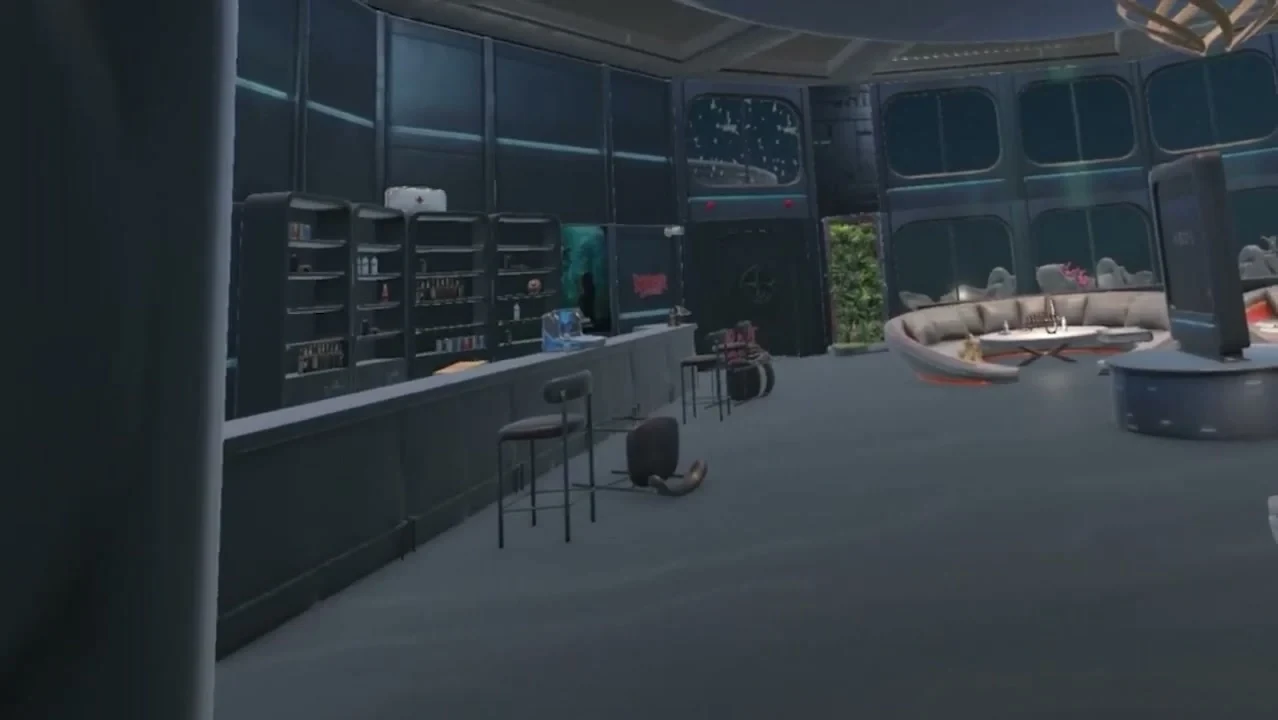
AROS turns a future scenario into an underwater world people can explore in VR. In a three-person project team, we combined futures research with AI-assisted media production, bringing imagery, 3D assets and spatial sound together in Unity.
- Challenge
- Turn a future scenario for a partially autonomous underwater habitat into a spatial experience.
- Our contribution
- Research, scenario development, AI art direction, asset selection and refinement, interaction and implementation in Unity.
- Result
- An explorable VR prototype for Meta Quest 3 and 3S with spatial navigation, interactions and a soundscape.
A world built around a researched idea
How might a partially autonomous underwater habitat be supplied and maintained? A STEEP analysis examined social, technological, economic, environmental and political influences. It led to the scenario of a supported pilot project, with visible repairs and shared spaces.
Art direction for generated content
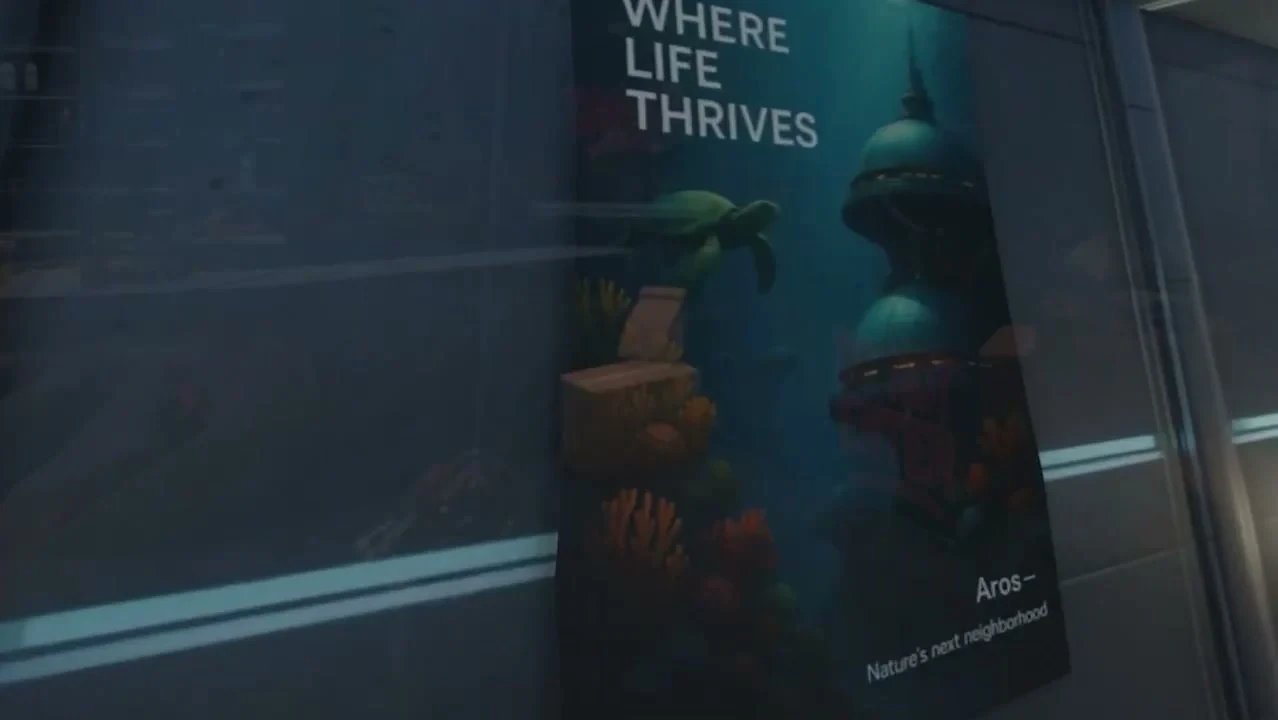
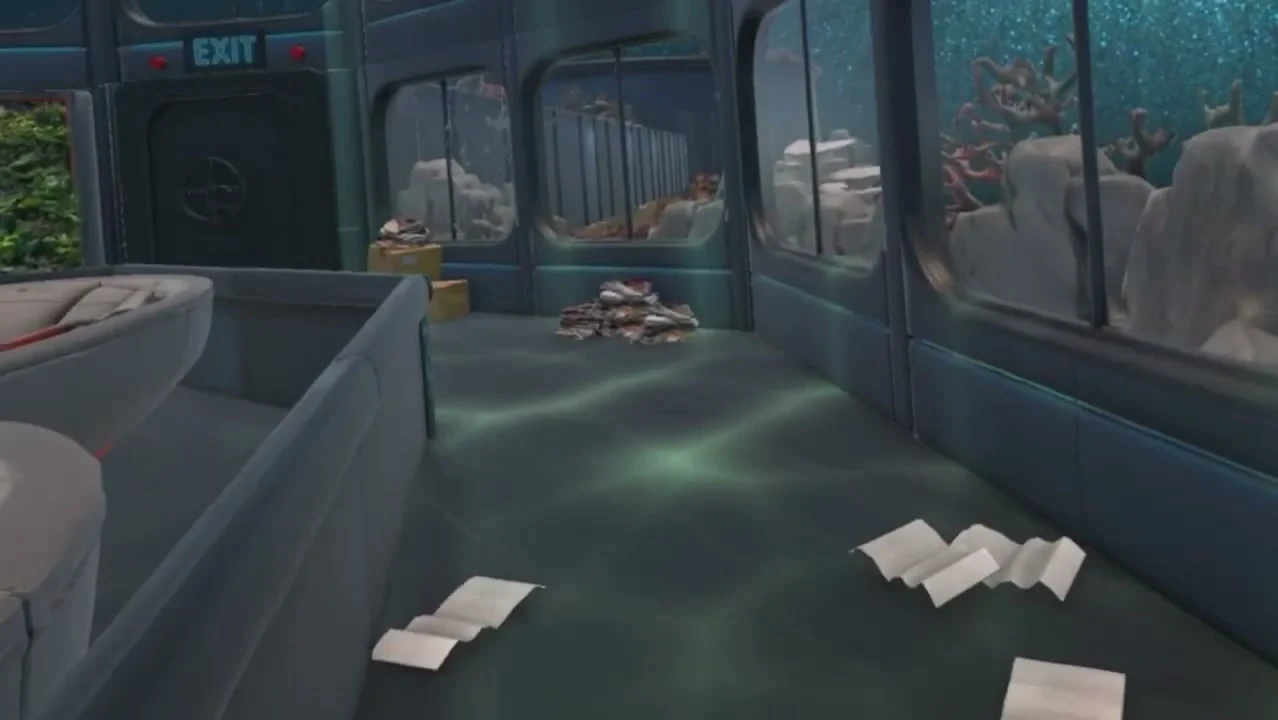
The visual and audio content was generated with AI. We selected suitable assets, refined them and assembled them in Unity, where scale, materials, routes and sound placement had to work together.
Orientation within the environment
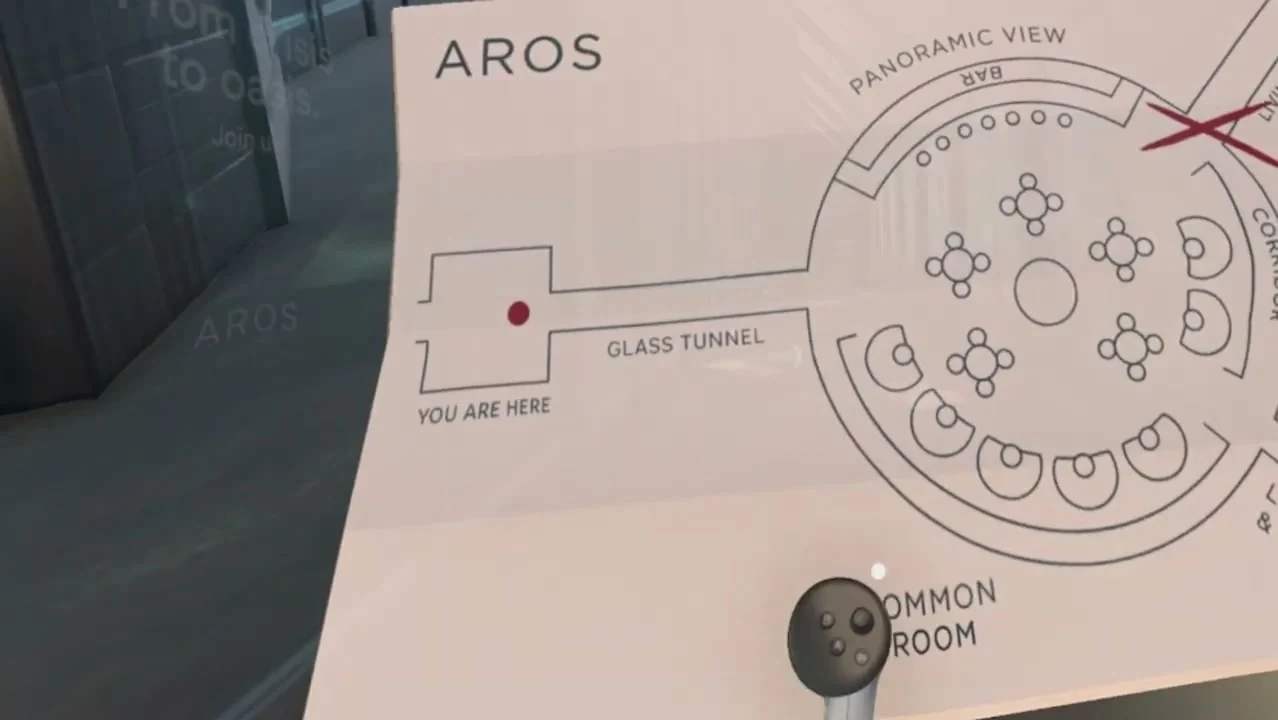
A handheld map, named rooms and recognisable exits help people explore. Notes, supplies and signs of repair tell the story of life in the habitat. We tried navigation, interactions and sound on Meta Quest 3 and 3S.
AI as a production process
The scenario defined which spaces, objects and sounds belonged in the world. We used it to assess, select and refine generated material. Integration in Unity turned those assets into a space people could move through and interact with.
The project includes a generated habitat mesh and texture, plus 43 audio files for music, underwater ambience, tools and other sounds. We arranged the audio spatially. In the headset, the prototype plays these prepared assets; AI generation is part of production.
The scenario behind the design decisions
A Future Triangle and scenario matrix helped us examine the forces supporting the habitat and the obstacles it faced. The chosen world therefore shows a pilot project with signs of use. Repairs and shared rooms make maintenance and community life visible.
These decisions became the criteria for imagery, objects, signage and sound. A generated asset had to fit the world being portrayed. Art direction connects the research question to the selection and refinement of production material.
The experience on its target device
Unity 6, Meta XR, OpenXR, URP and the Input System provide the technical foundation. Grabbable objects and spatial sound respond to movement through the space. In the headset, we checked how scale, legibility and controls were experienced.
AROS runs from the research concept through asset production to an executable VR prototype. The case shows how we translate a brief into production decisions and assess the result on its target device.
Inside the project
Design and technology in context.
Unity 6, Meta XR, OpenXR, URP, spatial audio and AI-assisted asset production. Research and art direction provide a shared context for implementation.
Planning something similar?
Tell us about your project. Together, we can work out where our design and development skills can support your team.
Discuss a similar project