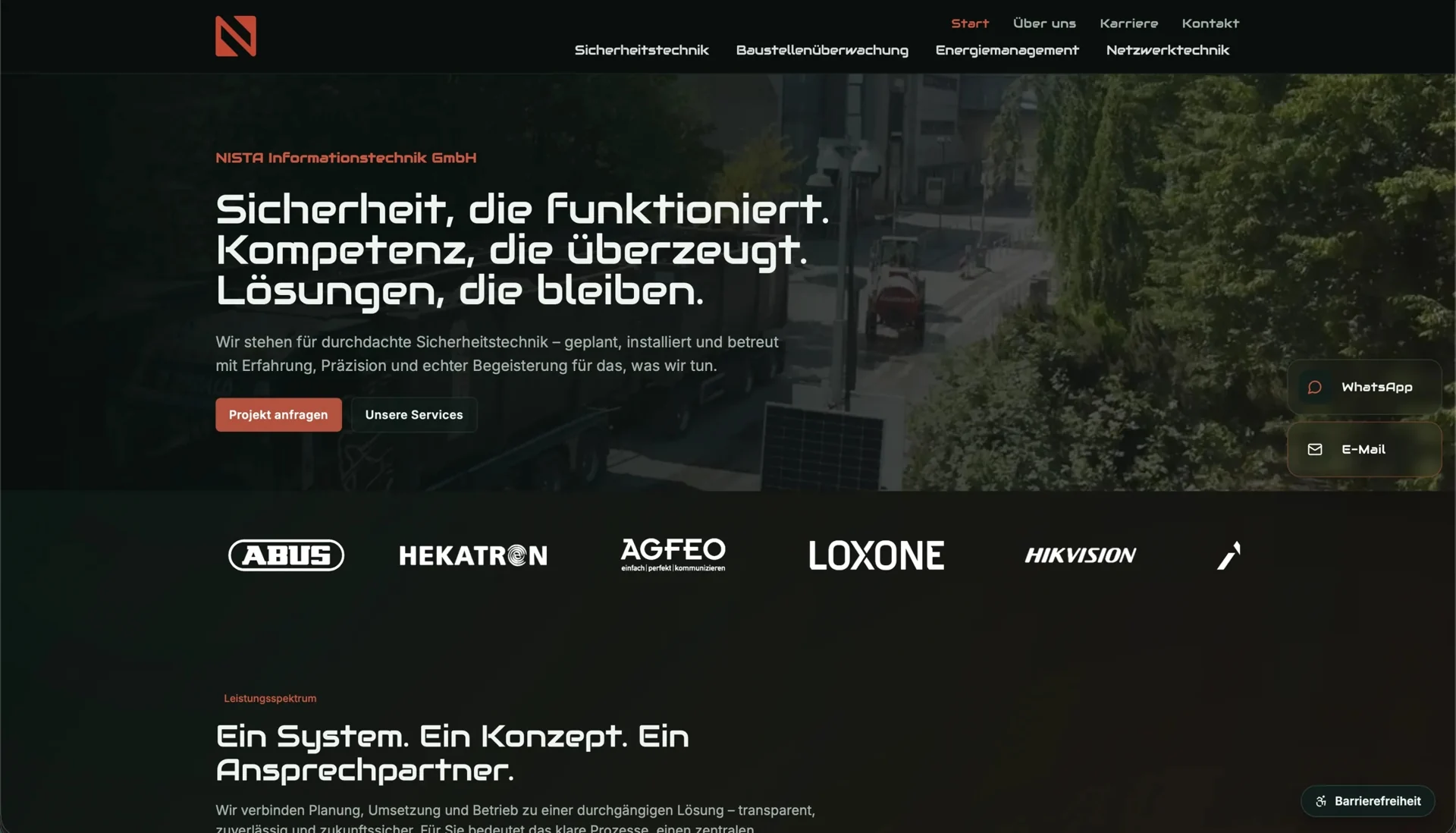
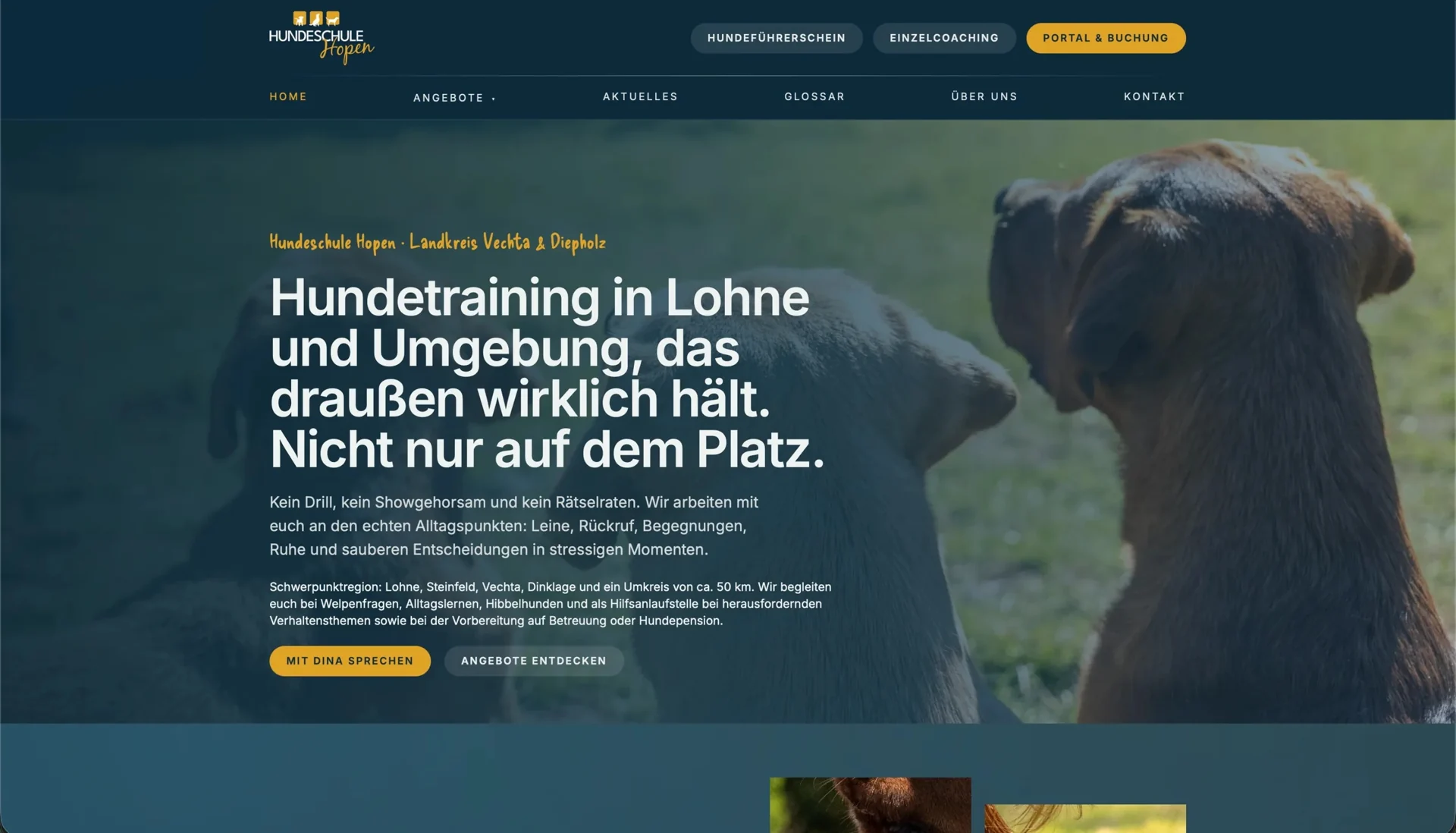
You want to offer a new workshop. A single page with content, prerequisites and an enquiry flow may be enough. Explaining the whole business is a different task: visitors may need to compare services, find contacts and understand the working relationship.
A landing page focuses the entry on a specific offer. It can sit on the same domain within a larger website. Whether one page is enough depends on the decision visitors need to make there.
A specific promise and a clear next action
A landing page suits a focused offer when the entry already provides a clear reason to visit: an event, campaign or specific problem. The content continues that context and answers questions before the action.
This does not mean removing every other link. Visitors may need information about the provider, contact details or necessary legal information. Keep the main route clear without preventing people from understanding the offer.
For search advertising, Google considers the relevance and usefulness of the destination within landing-page experience. A useful planning question remains: does the page provide what the entry led someone to expect?
When several needs matter equally
A multi-page website makes sense when visitors have different decisions to make. A business may offer consultancy, implementation and ongoing support, each with different prerequisites and questions. One long page can mix these routes together.
An overview can support that choice and lead to detail pages for offers with their own information needs. Repeated sections can use a shared template, while different page titles should still answer different questions.
Integration is easy to underestimate
One page can be technically demanding if it checks availability, accepts payments or transfers data to a CRM. Conversely, several information pages may need relatively little functionality.
Your brief therefore needs to explain what should happen after the click, independently of page count. Sending a message and reserving a place require different integrations, as does handling failed processing. Language versions and future editing tasks also belong in that scope.
If considering a separate domain, establish who manages it and how visitors move between the offer and the business. A separate domain is not a prerequisite for a landing page and creates operational work of its own.
You can base the decision on the questions that must be answered before the intended action. If they concern one offer, you can start with that page. If visitors first need to choose between services, that choice also belongs in the planned journey.
For an enquiry about website and landing-page development, bring the list of required content and functions. If the offer first needs structuring and designing, include that work in the web design commission.