Beneath
Beneath translates accounts of depression into spatial scenes on a smartphone. It was created by a seven-person university team. Our contribution spans research synthesis, experience and interface design, prototyping and evaluation.
- Challenge
- Translate reported experiences into understandable spatial metaphors and a mobile interaction journey.
- Our contribution
- Research synthesis, experience strategy, interaction and UI design, visual design, prototyping and testing.
- Result
- Three AR scenes with their own spatial design, interaction logic and a shared mobile interface.
People’s experiences as the starting point
Interviews and a survey of 280 people formed the foundation. Recurring descriptions of overwhelm, emptiness and withdrawal informed three distinct scenes. The research included people with lived experience of depression and people without it.
A different interaction for each scene
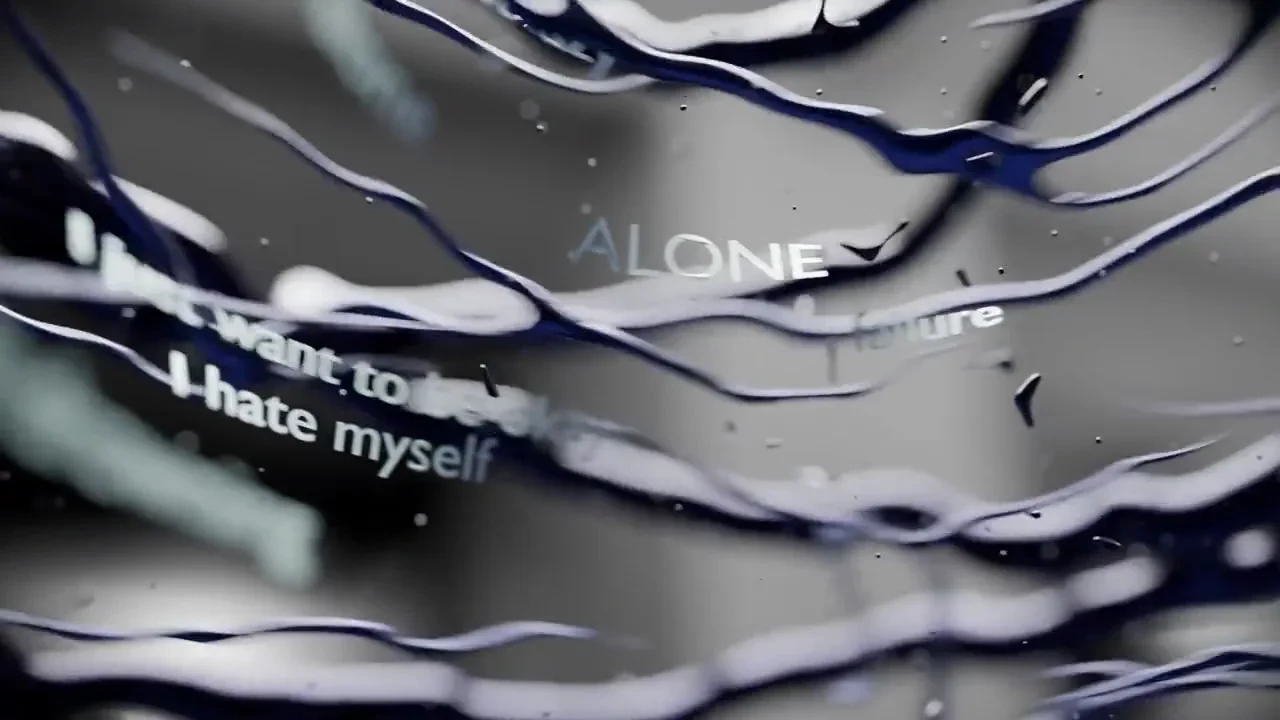
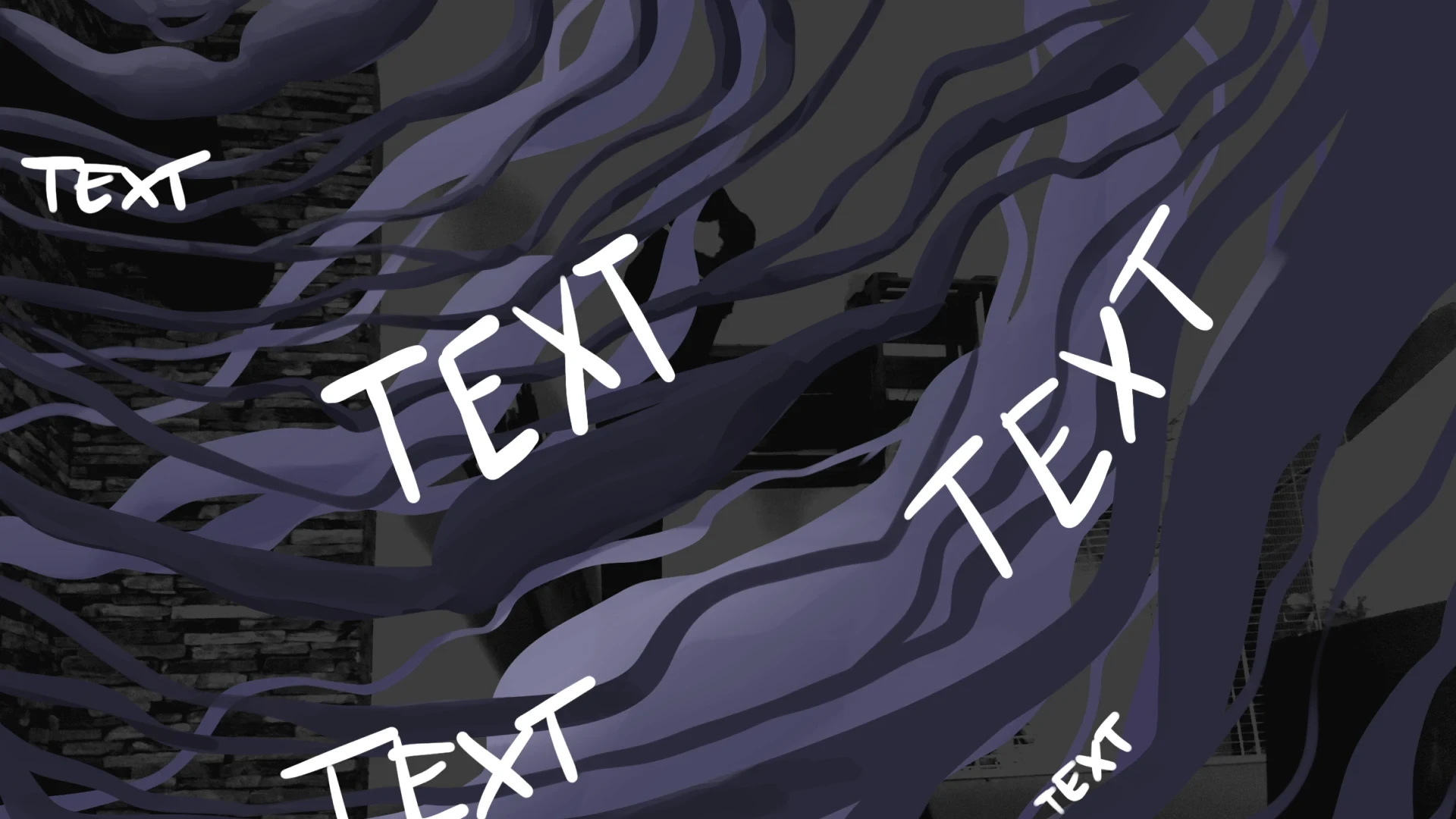
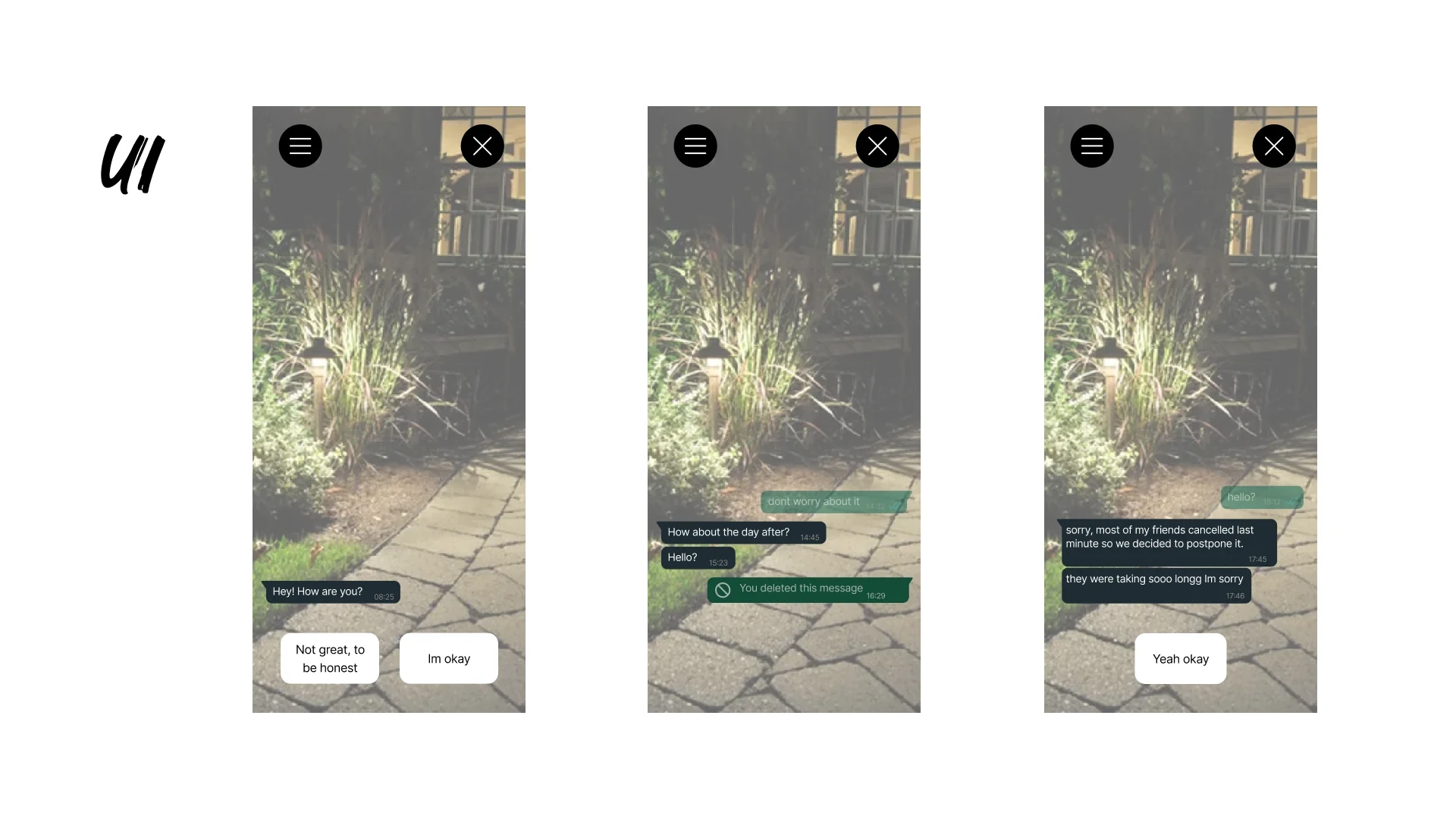
Overwhelmed uses a vortex of thoughts and text contributions. Numb presents an obscured reflection and a hidden room. In Harm, a cloud responds to choices in a branching chat. Each scene has its own visual and sound design.
Mobile controls for a spatial experience
An introduction, information and feedback accompany the AR scenes. The menu lets people leave the experience and access contextual information. Controls need to work on the phone while attention is also directed towards the surrounding space.
From research to spatial metaphors
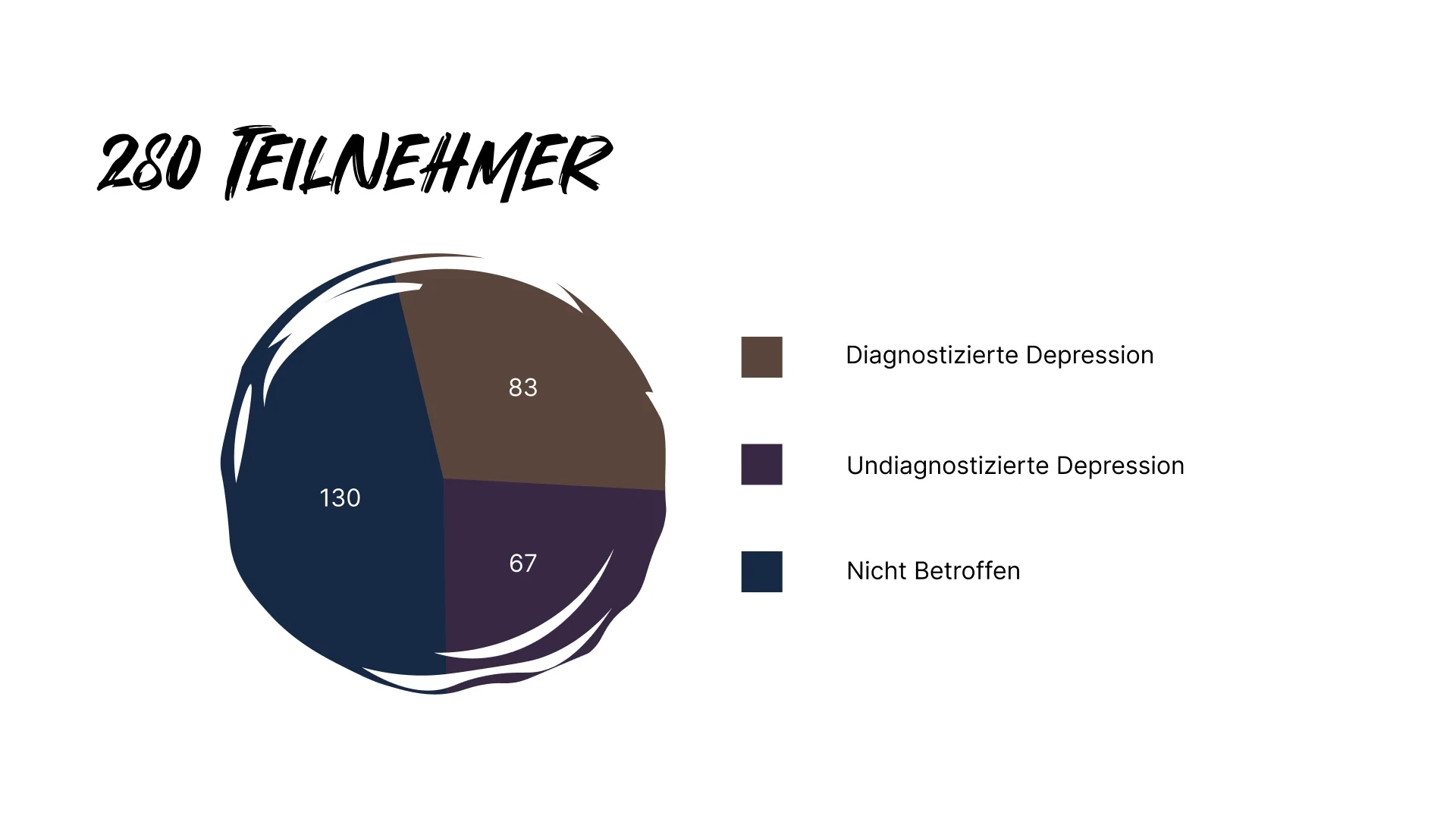
Of the 280 respondents, 130 identified as unaffected, 83 described undiagnosed depression and 67 reported a diagnosis. The analysis brought mental, social and physical aspects together and considered how people without lived experience understood them.
We derived different interaction rules from these themes. One scene allows a personal contribution; in another, lack of control is part of the experience. Each metaphor also determines which actions the scene makes available.
3D effects with a specific purpose
Image targets anchor the scenes in the smartphone view. Distortion shaders, depth, animation and sound realise the spatial metaphors. The cloud responds to chat choices; the reflection combines the character, image surface and hidden space.
These effects need a clear interaction flow. Our contribution therefore includes confirmation after input, guidance on available actions and visible routes back. Experience design and the interface were developed together.
What changed after testing
Qualitative feedback and the short UEQ-S questionnaire were used to evaluate the first prototype. The findings led to a revised introduction, clearer copy and feedback after input. Navigation and scenes were adjusted too.
In the second test round, recorded UEQ-S medians were higher across all measured dimensions. The team also examined participants’ ratings of the depicted feelings and their understanding of the experience. The feedback documents how the prototype changed over the course of the project.
Inside the project
Design and technology in context.
Mobile augmented reality with image targets, 3D scenes, shaders, animation and sound. Research, interface design and two test rounds connect spatial design to use.
Planning something similar?
Tell us about your project. Together, we can work out where our design and development skills can support your team.
Discuss a similar project