Recruiting participants for UX research starts with the task they need to perform. “People who know about bicycles” is not yet a useful audience for a spare-parts shop: it includes customers, workshop staff and retailers with very different knowledge and responsibilities. What matters to the study is who actually does the work and what experience they bring to it.
This guide develops a recruitment brief with screening questions, response paths and an invitation. Use the fillable recruitment screener PDF to prepare the study; the editable screener template (Markdown) also contains the full question flow for adaptation. Recruiting and screening belong together, rather than leaving the search for suitable people until the research session itself.
The research question determines who you need
Suppose you are developing a spare-parts shop for bicycle workshops. Before an order, staff need to identify a part that fits an existing model, then pass their selection to purchasing or place the order themselves. You want to investigate whether the product information supports a reasoned selection. Price approval and subsequent invoice processing are outside the initial task.
For this question, recruit people who select parts, prepare parts lists or process orders in their workshop work. Someone who only pays invoices may help you investigate billing later, but brings a different perspective to product selection.
The GOV.UK participant-recruitment guide starts with actual or likely users. In the workshop example, translate this into specific activities rather than relying on job titles. A “workshop manager” may not personally select parts, while a new colleague may already do so regularly.
Turn the audience into justified selection criteria
A recruitment brief describes the study clearly enough for another person to make the same selection. Alongside the research question, include required experience, useful differences between participants and the planned setup. Each criterion needs a reason: additional conditions make recruitment harder and can exclude relevant people.
For the workshop example, the brief could look like this:
| Criterion | How it affects selection | Reason |
|---|---|---|
| Personally selected parts, prepared a parts list or processed an order | Basis for initial screening; clarify the contribution in the screener | The test task needs a personal contribution to selection or preparation, rather than only forwarding a completed order. |
| A relevant activity within the past six months | Specified for this recruitment brief | Participants should be able to describe an activity they can still recall; agree the timeframe before recruiting. |
| Different levels of purchasing experience | Consider when forming the group | New and experienced staff bring different prior knowledge. |
| Different existing ordering methods | Consider when forming the group | Ordering by phone is not a reason for exclusion if the new shop is intended to support that transition. |
| Assistance or tools needed to participate | Resolve when organising participation | The session arrangements need to suit the person. |
Six months is a working decision for this example, not a general UX-research rule. Seasonal work or infrequent purchases may need a different timeframe. The question is whether the experience fits the study and whether the actual activity can still be discussed meaningfully.
A particular device should not automatically become a barrier either. If the study is planned for desktop but you recruit only people with their own laptop, you may change the audience unintentionally. Establish whether a device can be provided or an on-site session would work better. The research setup should not quietly define who counts as a user.
Write a screener with traceable response paths
A screener is a short selection questionnaire completed before an invitation. It needs to establish relevant experience without revealing the answer you want. NN/g’s screening guidance recommends asking about past behaviour and avoiding leading questions. “Do you regularly order spare parts and want to test our new shop?” would therefore be an unhelpful opening.
Start with an activity question that allows several plausible answers. In the complete template, participant-facing options are separate from internal selection rules: the person sees the questions, while the recruitment team applies the rules agreed beforehand. This overview shows the logic for our example.
| Screener question | How the answer is used |
|---|---|
| Which tasks have you personally handled when sourcing spare parts for a workshop? | Selecting, preparing a list or ordering leads to the next question. Invoice processing alone does not fit this round. Where roles overlap, clarify the contribution to selection. |
| When did you last personally select parts, prepare a parts list or process an order? | Use the date of that relevant activity. Processing an invoice later does not automatically meet the timeframe criterion. Follow up an unclear answer. |
| Briefly describe how you arrived at the appropriate part on that occasion. | The answer should make the person’s contribution understandable. Supplier or customer names are unnecessary. |
| What could you decide yourself, and who else was involved? | Record the role for selection; requiring additional price approval is not an automatic exclusion. |
| How did you assemble the details or pass the order on? | Existing ordering methods help shape the group. Phone, paper and online shops are all possible experiences. |
| What arrangements would let you take part? | Resolve device, location, possible times and support before the invitation. |
Answers such as “I cannot remember” and “none of these” need to be possible. Without them, a questionnaire pushes people towards an apparently suitable answer. In a multiple-choice question, “none of these” should also be exclusive of any specific activity.
Suitable answers do not yet make a complete participant group
Group selection follows the screener. If everyone available has used the same supplier and internal software for years, their routine may hide difficulties facing new users. For the workshop shop’s selection task, it therefore helps to consider experience alongside current ordering methods.
A simple planning sheet can record each participant’s code, relevant activity, most recent occasion, experience, ordering method and arrangements still to resolve. A person meets the required criteria, needs a follow-up or does not fit this round. Among those eligible, choose a combination that covers your question. That is more useful than assigning every answer a supposedly precise score.
A short conversation often resolves unclear responses. Use it to clarify the activity without demonstrating the eventual task or practising the new interface. Explaining the structure of the new product search already changes what someone knows before the test. Selection and preparation should enable participation without revealing the solution.
Where to approach suitable participants
Existing workshop contacts can help you start when contact for this purpose has been arranged appropriately. Professional networks, associations, groups or a specialist recruitment agency offer additional routes. A group organiser can pass on a neutral invitation instead of sharing members’ personal details, leaving interested people to decide whether to make contact.
Describe the activity in the approach without requiring a particular attitude to your product. “We are looking for people who select spare parts or prepare orders in a workshop” is clearer here than “We need enthusiastic users of our new spare-parts shop”. The latter already narrows selection towards positive attitudes or existing product knowledge.
An agency needs the same criteria as your own team. Agree which responses it checks during screening and which unresolved questions must be referred back before confirming a session. If suitable people are difficult to find, review criteria and contact routes together first. Quietly relaxing requirements would change which question the eventual study can answer.
Send an invitation people can plan around
After selection, send a specific invitation explaining the topic, duration, location or joining link, technical requirements and a contact for questions. Describe observers, planned recordings and any agreed incentive before someone confirms, rather than revealing these arrangements during the session.
For our example, the invitation could read:
Hello [name],
Thank you for your interest. We would like to investigate how people in workshops find spare-parts information and prepare a selection. You will attempt tasks using a design; your approach will help us understand which details are missing or difficult to find.
The session is planned for [duration] on [date] at [time and timezone], [location or video call]. We provide the tasks and test data. Please do not use documents containing customer or order details. Participation is voluntary; you can pause or end the session.
[Name/role] will facilitate the session. [Roles and number] will observe. [Planned recording, purpose and who can access it.] Information about participation and data processing is available at [link/attachment]; we are happy to answer questions before you decide.
[Agreed incentive and payment arrangements.] Please let us know if you need support or wish to change the appointment. Contact us at [contact].
Replace the bracketed sections before sending the message. For recording in particular, a vague “the session may be recorded” is not enough for working arrangements: the team needs to know what is planned, why it is needed and how the participant makes an informed decision about it.
Resolve organisation, recording and ownership beforehand
Name a person responsible for the screener, follow-up questions and scheduling, as well as the facilitator. Agree who takes notes and who observes. Observers need context about the research question and participants’ roles, rather than automatic access to everything submitted during registration.
Before starting, agree the purpose of contact details, responses and any recordings, appropriate information about processing, access and retention. The responsible organisation assigns these roles and keeps the decisions with the study brief. Scheduling information can be kept separately from findings recorded under participant codes.
The GOV.UK guide to informed consent for research explains which information should be available before someone agrees. Record what the person agreed to and begin any planned recording only after their permission. Decide during planning whether participation without recording is possible and how a refusal will be handled.
Plan cancellations as well. A reminder with location, time and a way to rearrange makes it easier to correct an appointment early. For reserve participants, agree whether they will only be contacted if a place becomes free or are explicitly being asked to remain available. Include the terms for that arrangement. For the next round, your documented confirmations, cancellations and rearrangements help plan reserves around the audience you are recruiting.
Check the screener against the task before recruiting
Walk through the entire selection process with someone unfamiliar with the questionnaire. Can they distinguish the options? Do unclear answers trigger a follow-up? Could someone meet all the criteria yet be unable to attempt the planned task meaningfully? This exposes problems before they consume time during recruitment.
In the workshop example, the task must investigate the same activity you recruited for. Someone who chooses parts using model information should not suddenly have to simulate a purchasing manager’s price approval. Prepare the relevant product details and test data alongside the task. Our usability-task template explains how to avoid prescribing the solution, while the interview guide with example questions helps structure conversations about current work.
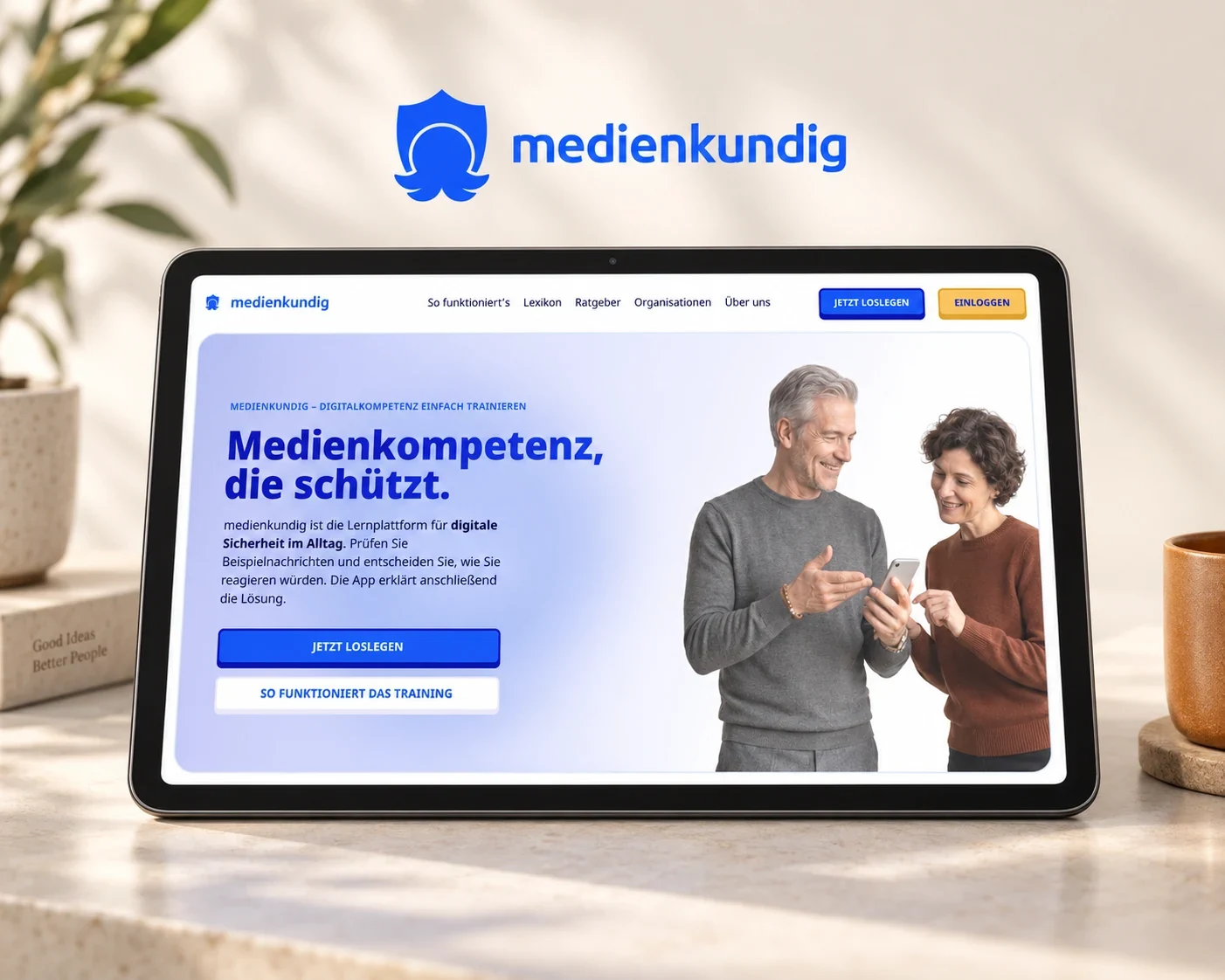
medienkundig and Bridagency show how research informs different product decisions. At medienkundig, experiences of digital deception inform concrete learning tasks; Bridagency investigated different ways of entering a wedding-planning journey. For your own study, the task and actual experience therefore remain the foundation of participant selection.
When we plan user interviews or usability testing with you, we explicitly agree who handles criteria, recruitment, screening, invitations and scheduling. Recruitment then fits the agreed study rather than becoming an unresolved extra task passed between people.